

Choosing healthcare in another country is a very different decision from booking an ordinary trip. A patient may be comparing hospitals, specialists, treatment options, costs, travel arrangements, and follow-up care – often while dealing with the stress and uncertainty that comes with a medical condition.
That is why JCI accredited healthcare has become an important consideration for many people researching treatment abroad.
But what does JCI accreditation actually mean? Does it guarantee better treatment? Why should patients from Canada and the United States pay attention to hospital accreditation when considering international care?
The answer requires a little more than a simple “yes” or “no.”
Joint Commission International (JCI) accreditation provides an external framework for evaluating healthcare organizations against defined standards related to quality and patient safety. JCI explains that its standards are designed to help healthcare organizations measure, assess, and improve performance, while its hospital accreditation framework includes patient-centered requirements, organizational management standards, patient safety requirements, and other quality-related expectations.
At the same time, accreditation should not be treated as a promise of a perfect outcome. The U.S. Centers for Disease Control and Prevention notes that accreditation can be useful when researching a medical facility, but accreditation does not guarantee a positive medical outcome.
For an international patient, that distinction matters.
The future of healthcare is likely to be shaped not only by advanced technology and specialist expertise, but also by measurable quality standards, patient safety, transparency, and continuity of care.
What Is JCI Accreditation and What Does It Mean for Patients?
JCI accreditation is an external evaluation of a healthcare organization against established quality and patient-safety standards.
Joint Commission International develops standards around important functions within healthcare organizations and states that these standards are intended to be reasonable, achievable, and measurable. JCI also emphasizes the collection and use of data as part of quality-improvement systems.
In simple terms, JCI accreditation gives patients another way to look beyond a hospital’s advertising, website, or list of medical technologies.
It asks a more fundamental question:
Does the organization have structured processes designed to support safe, consistent, and continuously improving care?
Understanding Joint Commission International Accreditation
JCI is an international healthcare accreditation organization that evaluates healthcare institutions using standards developed with input from healthcare organizations, subject-matter experts, scientific literature, industry guidance, and other stakeholders.

JCI’s current hospital standards include four major sections:
- Accreditation Participation Requirements
- Patient-Centered Standards
- Health Care Organization Management Standards
- Global Health Impact Standards
The eighth edition of the hospital standards, released in 2024 and effective January 1, 2025, also introduced or expanded requirements involving healthcare technology, patient safety, cybersecurity, environmental sustainability, disclosure of clinical errors, vulnerable populations, infection control, and other areas.
That evolution is important. Healthcare is not static, so healthcare quality standards cannot remain static either.
What Does JCI Accreditation Actually Tell a Patient?
For an international patient, a JCI accredited hospital can provide evidence that the organization has undergone an external accreditation process focused on defined quality and safety requirements.
It does not mean:
- every treatment will be successful;
- every individual physician has the same level of experience;
- complications can never occur;
- a particular treatment is automatically appropriate;
- one hospital is necessarily better for every patient.
The CDC specifically advises medical travelers to research both the clinician and the facility and notes that accreditation does not guarantee a positive outcome.
This is why responsible medical decision-making should consider accreditation as one important part of a broader evaluation.
Why Healthcare Quality Standards Matter More Than Ever
Healthcare has become increasingly global. Patients today can access information about hospitals, specialists, procedures, prices, and technologies across borders in ways that were difficult to imagine a generation ago.
More choice, however, does not necessarily make decisions easier.
It can actually make them harder.
A patient researching healthcare abroad may find dozens of hospitals claiming to offer advanced treatment. Some may promote modern operating rooms. Others may highlight experienced specialists, attractive pricing, luxurious accommodations, or short waiting times.
But how can a patient compare the underlying quality of care?
That is where international healthcare quality standards become relevant.
Quality Is More Than Medical Technology
A modern machine does not, by itself, create a high-quality healthcare system.
Quality also involves the processes surrounding treatment.
JCI’s hospital standards cover areas including patient-centered care, organization management, patient safety, healthcare technology, and quality-related systems. JCI also states that accredited organizations are expected to use data within their quality-improvement systems.
For a patient, that broader view of quality may include questions such as:
- How are patients correctly identified?
- How are critical clinical communications handled?
- How is medication safety managed?
- How are surgical procedures verified?
- How are infections prevented and monitored?
- How are incidents and safety concerns addressed?
- How does the organization continuously improve its processes?
These questions can matter just as much as whether a hospital advertises the latest medical technology.
Why International Patients Have Additional Concerns
Someone receiving treatment close to home already has to think about medical risks. An international patient has additional layers to consider.
Travel may introduce communication challenges. Medical records may need to cross borders. A patient may recover in a different healthcare system and eventually return home for follow-up.
The CDC identifies several considerations for medical travelers, including researching clinician and facility credentials, communication, travel after surgery, and continuity of care after returning home.
For people traveling from Canada or the United States, these practical issues deserve attention before a treatment decision is finalized.
JCI Patient Safety Standards: What Do They Focus On?
One reason JCI healthcare standards attract attention is their focus on patient safety.
JCI’s International Patient Safety Goals have historically included areas such as correct patient identification, effective communication, medication safety, safe surgery, infection prevention, and reducing patient harm from falls.
The specific standards and requirements evolve over time, but the underlying principle remains important: safe care depends on reliable systems, not only individual intentions.
Standardizing Important Processes
Imagine two hospitals performing the same type of procedure.
One may rely heavily on informal habits. Another may have clearly defined processes for patient identification, surgical verification, communication, documentation, infection prevention, and quality review.
Standardization does not eliminate every risk, but it can help reduce unnecessary variation and create a more structured environment for identifying problems and improving performance.
This is one reason hospital accreditation for medical tourism can be useful during the research stage.
Continuous Improvement Matters
Accreditation should not be viewed as a trophy that a hospital earns and then forgets about.
JCI describes its standards as part of an evaluation process intended to help healthcare organizations measure, assess, and improve performance. Its current hospital accreditation framework also places increased attention on emerging issues such as healthcare technology, cybersecurity, patient safety, and environmental sustainability.
That is particularly relevant in an era when healthcare systems are becoming more technologically sophisticated.
More technology creates more opportunities—but also new responsibilities around training, data, cybersecurity, communication, and safe implementation.
Why JCI Accreditation Matters for International Patients
For people considering treatment abroad, one of the biggest challenges is uncertainty.
The patient may not know the healthcare system personally. They may not speak the local language. They may be unfamiliar with local regulations or hospital practices. They may also be comparing treatment options based on information found online.
This is why JCI accreditation matters for international patients is such an important question.
A recognized accreditation framework can give patients another objective factor to investigate when comparing facilities.

JCI Accreditation Can Help Patients Ask Better Questions
Accreditation should not replace due diligence. Instead, it can make due diligence more structured.
For example, rather than asking only:
“Does this hospital have advanced equipment?”
a patient can also ask:
“What quality standards does this hospital follow?”
“Is its accreditation current?”
“Who is performing my procedure?”
“What are the hospital’s capabilities for my specific treatment?”
“How will my care be coordinated after I return home?”
These are better questions because they focus on the entire healthcare journey.
The Benefits of JCI Accreditation for Medical Tourists
The benefits of JCI accreditation for medical tourists should be understood in the context of risk assessment rather than guarantees.
Potential benefits include having an additional quality indicator when researching facilities, greater insight into the hospital’s commitment to structured quality processes, and a clearer basis for comparing healthcare organizations.
JCI itself describes accreditation as a process designed to evaluate the effectiveness of an organization’s patient safety and quality systems.
Still, a medical traveler should look beyond the accreditation badge.
The CDC recommends researching the healthcare professional performing the procedure and the facility where treatment will occur, while also considering communication and follow-up needs.
How to Choose a JCI Accredited Hospital Abroad
Searching for JCI accredited hospitals for international patients is a useful starting point, but it should never be the final step.
The right question is not simply:
“Is this hospital JCI accredited?”
It is:
“Is this hospital appropriate for my medical needs, and what evidence supports that choice?”
Verify the Hospital and Its Current Accreditation
Start by confirming the hospital’s accreditation status and understanding what type of accreditation applies.
A healthcare organization should accurately represent its accreditation status and the services or programs to which accreditation applies. JCI’s accreditation policies also make clear that accreditation is not automatically renewed indefinitely; organizations seeking to continue accreditation must undergo the relevant assessment process again.
That is why patients should avoid relying solely on an old logo, screenshot, or third-party claim.
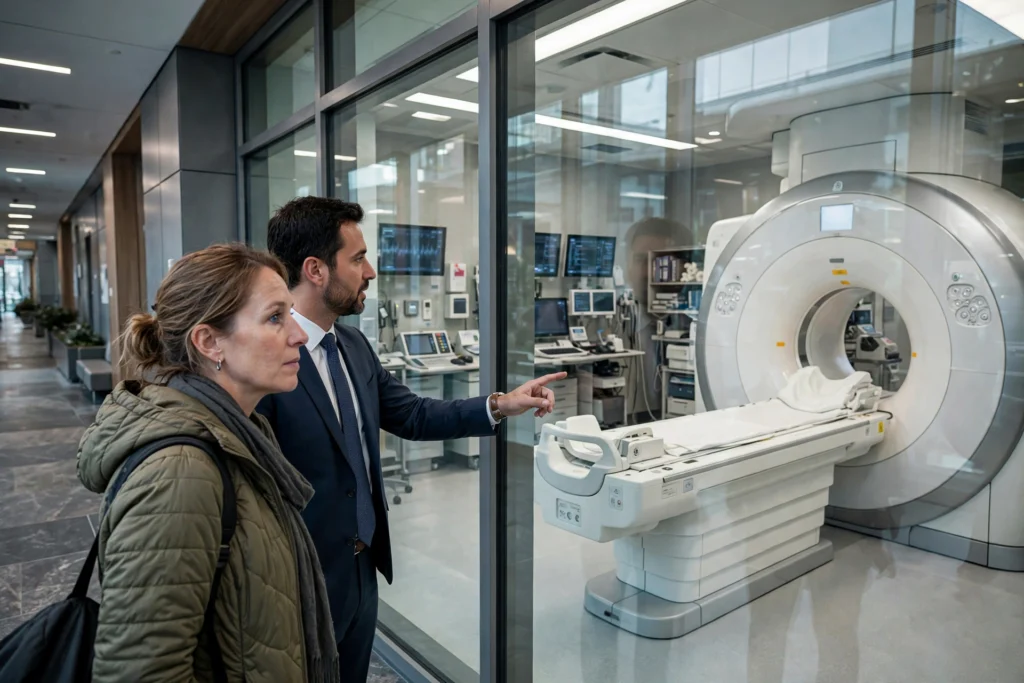
Research the Treating Specialist
A quality hospital is important, but so is the professional providing the care.
Patients should research:
- Medical qualifications
- Specialty and subspecialty
- Professional licensing
- Experience with the relevant procedure
- Hospital affiliation
- Relevant clinical expertise
This is especially important for complex procedures, where the patient’s specific condition and treatment plan matter enormously.
Evaluate the Facility for Your Specific Treatment
A hospital might be excellent in one area and less relevant in another.
For example, someone considering orthopedic surgery should investigate the facility’s orthopedic and surgical capabilities rather than making a decision based only on the hospital’s general reputation.
Likewise, patients exploring cardiology, neurosurgery, oncology, urology, ophthalmology, women’s health, dentistry, or other specialties should evaluate the resources relevant to that specific field.
Ask About Continuity of Care
Treatment does not necessarily end when the patient leaves the hospital.
An international patient should understand:
- What follow-up is required?
- How long should they remain at the destination?
- What documents will they receive?
- Who handles questions after returning home?
- How will their local physician receive relevant information?
- What happens if a complication develops?
The CDC specifically highlights continuity of care as an important consideration for medical travelers.
The Future of JCI-Accredited Healthcare: From Accreditation to Transparency
The next stage of JCI accredited healthcare is likely to be shaped by a broader expectation: patients want to understand not only whether a hospital is accredited, but how that quality framework affects their experience.
Data Will Become Increasingly Important
Modern healthcare increasingly relies on measurement.
JCI states that organizations should collect data as part of their quality-improvement systems and use well-defined, evidence-based measures relevant to their patient populations and services.
For patients, that suggests a future in which conversations about quality become more specific.
Instead of relying entirely on reputation, patients may increasingly want transparent information about processes, outcomes where appropriate, patient experience, safety, and performance.

Technology Will Raise the Bar for Quality
Artificial intelligence, robotic-assisted procedures, telehealth, digital records, remote monitoring, and other innovations are changing healthcare.
But technology does not automatically equal better care.
The more advanced a healthcare environment becomes, the more important it is to have appropriate training, governance, cybersecurity, communication, and patient-safety processes around that technology.
JCI’s eighth-edition hospital standards already include a dedicated Healthcare Technology chapter addressing areas such as electronic health records, telehealth, and cybersecurity.
That is a useful reminder that the future of healthcare is not simply about buying newer equipment. It is about using technology responsibly within a high-quality care system.
International Patients Will Look for More Than Low Cost
Cost has always been an important factor in medical tourism, but it should not be the only factor.
A lower quoted price may not tell a patient anything about:
- quality systems;
- clinician expertise;
- hospital capabilities;
- communication;
- travel requirements;
- rehabilitation;
- follow-up care;
- unexpected expenses.
For international patients, the future of medical tourism is likely to favor informed decision-making rather than price alone.
What Should International Patients Check Before Traveling for Treatment?
A simple checklist can make the process less overwhelming.
Before Choosing a Hospital
Ask:
- Is the facility appropriately accredited?
- Is its accreditation current?
- Does the hospital have the capabilities relevant to my condition?
- Who will perform my procedure?
- What are the physician’s credentials and experience?
- Can I receive a clear explanation of the proposed treatment?
- Are the costs and exclusions explained?
Before Booking Your Trip
Confirm:
- Medical records have been reviewed.
- The treatment plan is understood.
- Travel timing has been discussed with an appropriate healthcare professional.
- Visa and travel requirements are understood.
- Accommodation and transportation are planned.
- Insurance and medical-travel coverage have been investigated.
- Follow-up arrangements have been discussed.
The CDC recommends obtaining appropriate pretravel medical guidance and considering procedure-specific travel risks, communication, and follow-up care.
For practical planning, patients can also explore TraveCure’s Medical Visa Information and Medical Tourism Travel and Complications Insurance resources.

Before Returning Home
Make sure you understand:
- Your discharge instructions
- Medications
- Warning signs that need attention
- Follow-up schedule
- Restrictions on travel and activity
- Who to contact with questions
- What medical records you will take home
The goal is not simply to have a successful hospital stay. It is to create a coordinated journey from evaluation to treatment and appropriate recovery.
How TraveCure Helps Patients Navigate International Healthcare
Choosing healthcare abroad can feel complicated, especially when patients and families are trying to coordinate medical information, hospitals, specialist consultations, travel, and practical arrangements at the same time.

TraveCure is a medical facilitation service, not a medical facility. Its role is to help patients navigate and coordinate the logistical side of an international healthcare journey rather than provide medical advice or treatment.
According to TraveCure, the company partners with JCI-accredited hospitals and helps patients through steps that include understanding their case, coordinating medical review, facilitating specialist discussions, supporting logistics, and helping with follow-up coordination.
This approach is especially relevant for patients who may want help comparing options without feeling pressured into a decision.
TraveCure’s listed specialties include orthopedics, dentistry, cardiology, neurosurgery, urology, oncology, ophthalmology, dermatology, obstetrics and gynecology, women’s health and fertility, health screening, and Ayurveda.
For patients considering treatment abroad, these resources can help turn a large and confusing process into a series of understandable decisions.
The Future of Medical Tourism Is Quality-Driven
The future of international healthcare should not be defined by flashy hospital websites, impressive technology, or the lowest advertised price.
It should be defined by quality, safety, transparency, appropriate clinical expertise, informed decision-making, and continuity of care.
That is where JCI accredited healthcare can play an important role.
JCI accreditation provides an established framework for evaluating healthcare organizations and encourages structured approaches to quality improvement and patient safety.
But smart medical travelers should take the next step.
They should investigate the hospital. Research the treating specialist. Understand the treatment. Ask about risks and alternatives. Consider travel and follow-up requirements. Review costs and coverage. And make sure they have a plan for care after returning home.
In other words, accreditation is not the entire decision.
It is part of a better decision-making process.
For patients and families in Canada and the United States considering treatment abroad, TraveCure helps simplify that process by acting as a bridge between patients and international healthcare providers. Its focus is on coordination, logistics, transparency, and patient advocacy—not on providing medical treatment itself.
Ready to Explore Your International Healthcare Options?
Before making a decision about treatment abroad, take the time to understand your options and ask the right questions.
Connect with TraveCure for a personalized consultation and learn how our medical facilitation team can help you navigate your international healthcare journey with greater clarity, transparency, and confidence.
Frequently Asked Questions About JCI Accredited Healthcare
What is JCI accreditation?
JCI accreditation is an external evaluation process in which healthcare organizations are assessed against defined standards related to quality, patient safety, organizational processes, and other aspects of healthcare performance. JCI describes its standards as a foundation for measuring, assessing, and improving performance.
Why is JCI accreditation important for international patients?
JCI accreditation can provide an additional quality indicator when international patients compare healthcare facilities. It can help patients investigate whether a hospital has undergone external evaluation against structured quality and patient-safety requirements. However, it should be considered alongside physician credentials, facility capabilities, treatment suitability, cost, communication, and follow-up planning.
Does JCI accreditation guarantee a successful medical outcome?
No. JCI accreditation does not guarantee a particular medical outcome. The CDC specifically advises medical travelers to research both the clinician and healthcare facility and notes that accreditation does not guarantee a positive outcome.
What do JCI healthcare standards cover?
JCI hospital standards cover multiple areas of healthcare quality and organization, including patient-centered care, organizational management, patient safety, healthcare technology, and other requirements. The current eighth edition also includes areas such as cybersecurity, environmental sustainability, vulnerable populations, disclosure of clinical errors, and expanded patient-safety requirements.
Are JCI accredited hospitals safer than non-accredited hospitals?
It would be too broad to say that accreditation guarantees that one hospital is safer than every non-accredited hospital. JCI accreditation is better understood as evidence that a healthcare organization has undergone an external standards-based evaluation. Patients should still research the hospital, physician, treatment, and continuity-of-care arrangements.
Is JCI accreditation important for medical tourism?
Yes, it can be an important consideration. Hospital accreditation for medical tourism provides one additional way to assess a healthcare organization, particularly when a patient is comparing facilities in unfamiliar healthcare systems. It should be part of a broader due-diligence process rather than the sole reason for choosing a hospital.
How can I choose a JCI accredited hospital?
To learn how to choose a JCI accredited hospital, start by verifying the hospital’s current accreditation status. Then research the treating physician, the hospital’s relevant specialty capabilities, treatment options, expected recovery, pricing, communication arrangements, travel considerations, and follow-up care.
What should I look for when evaluating a hospital abroad?
When learning how to evaluate a hospital abroad, consider accreditation, physician qualifications, relevant clinical experience, facility capabilities, treatment transparency, infection-control and patient-safety processes, communication, cost transparency, and continuity of care after you return home. The CDC recommends researching both the healthcare professional and facility before traveling.
Are JCI accredited hospitals suitable for every international patient?
Not necessarily. Accreditation does not determine whether a particular treatment is appropriate for an individual patient. The medical condition, treatment plan, physician expertise, facility capabilities, and patient’s overall circumstances should all be evaluated by qualified healthcare professionals.
How can TraveCure help international patients?
TraveCure is a medical facilitation service, not a medical facility. According to its website, the company helps patients navigate the international healthcare journey by coordinating with JCI-accredited healthcare providers, facilitating medical reviews and specialist consultations, and supporting practical logistics and follow-up coordination.
For medical emergencies, patients should always contact their local emergency services or appropriate healthcare provider first.

Final Takeaway
For today’s international patient, quality should never be an afterthought.
JCI accredited healthcare offers a structured way to consider quality and patient safety when researching treatment abroad. But the smartest approach is broader: verify accreditation, investigate the physician, understand the treatment, assess the facility, plan for travel, review financial and insurance considerations, and prepare for follow-up care.
When those pieces come together, patients can make more informed healthcare decisions and approach international treatment with greater clarity and confidence.