
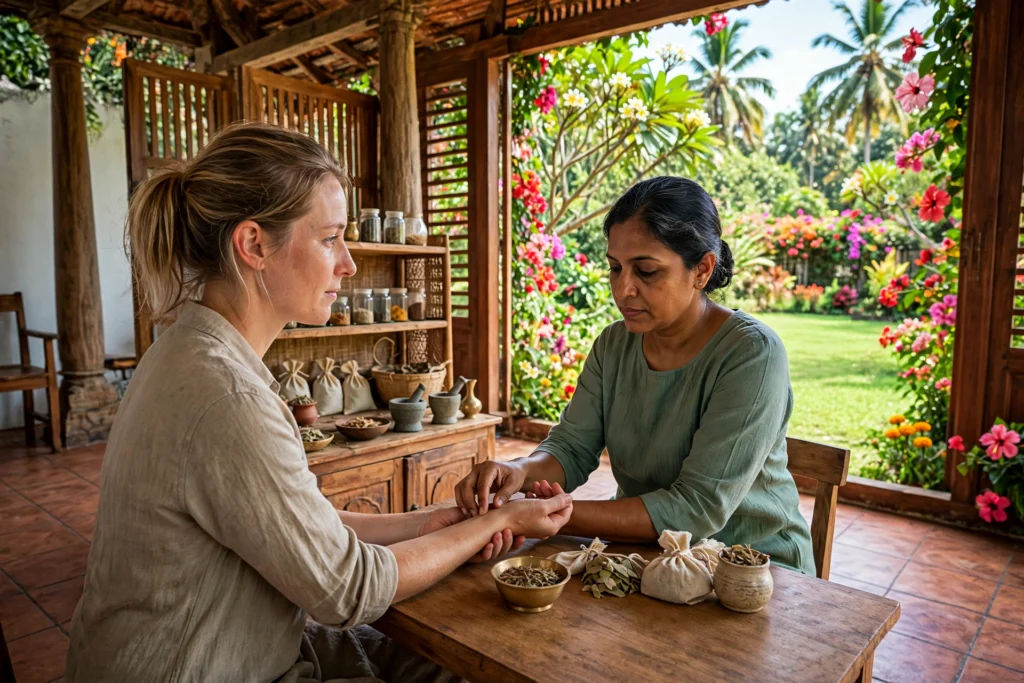
Ayurveda has been part of India’s health traditions for centuries, yet its ideas are no longer confined to India. People in Canada, the United States, and many other parts of the world are increasingly curious about Ayurveda, from traditional therapies and Ayurvedic massage to personalized lifestyle practices and wellness programs.
But what exactly is Ayurveda?
For some people, it means herbal remedies. For others, it brings to mind meditation, oil massage, Panchakarma, yoga, or a peaceful retreat in Kerala. In reality, Ayurveda is much broader. It is a traditional Indian system of medicine with its own ideas about health, diet, daily routines, individual constitution, and therapeutic care.
At the same time, there is an important distinction worth keeping in mind. The fact that a practice has been used traditionally for a long time does not automatically mean that every modern health claim about it has been scientifically proven. Current research supports some specific Ayurvedic interventions to varying degrees, while evidence for many others remains limited. Safety and quality are equally important considerations, particularly when herbal or mineral preparations are involved.
In this guide, we will explore what is Ayurveda, where it came from, the principles behind Vata, Pitta and Kapha, common Ayurvedic therapies, what modern research actually says, and what people from Canada and the USA should consider before seeking Ayurvedic treatment in India.
What Is Ayurveda?
Ayurveda is a traditional system of medicine that originated in India. The word is commonly translated as “knowledge of life” or “science of life.” Its approach is broader than treating an isolated symptom. Traditional Ayurvedic practice can involve diet, lifestyle, herbal preparations, physical therapies, exercise, and other approaches intended to support health and wellbeing.
The National Center for Complementary and Integrative Health (NCCIH), part of the U.S. National Institutes of Health, describes Ayurveda as an ancient Indian medical system that takes a holistic approach to physical and mental health. It also notes that Ayurvedic treatment can involve products, diet, exercise, and lifestyle changes.
That broader approach is one reason Ayurveda continues to attract attention today.
Instead of asking only, “What symptom do I have?”, Ayurvedic traditions may also consider a person’s constitution, habits, food, sleep, activity, environment, and other aspects of everyday life.
This is often described as holistic wellness, although that term can mean different things in different settings.
It is also important to understand that traditional Ayurvedic concepts should not automatically be treated as equivalent to modern scientific descriptions of human physiology. Concepts such as doshas, Prakriti, and Panchamahabhuta belong to the traditional Ayurvedic framework.
Ayurveda Is More Than Herbal Medicine
When Ayurveda is discussed online, herbs and supplements often receive most of the attention. They are certainly part of some Ayurvedic practices, but they are only one piece of the larger system.
Depending on the practitioner and the program, Ayurvedic care may include:
- Dietary recommendations
- Lifestyle guidance
- Traditional physical therapies
- Ayurvedic massage
- Herbal preparations
- Yoga or movement
- Meditation and relaxation practices
- Personalized consultation
- Traditional cleansing or therapeutic procedures
This is an important distinction for anyone searching for an Ayurvedic treatment abroad. A wellness retreat offering relaxation therapies is not necessarily the same as a practitioner-led Ayurvedic medical program.
The Ancient Roots of Ayurveda
Ayurveda has deep roots in the history of India, but its history is best understood as a long process of development rather than a system that appeared at one exact moment.
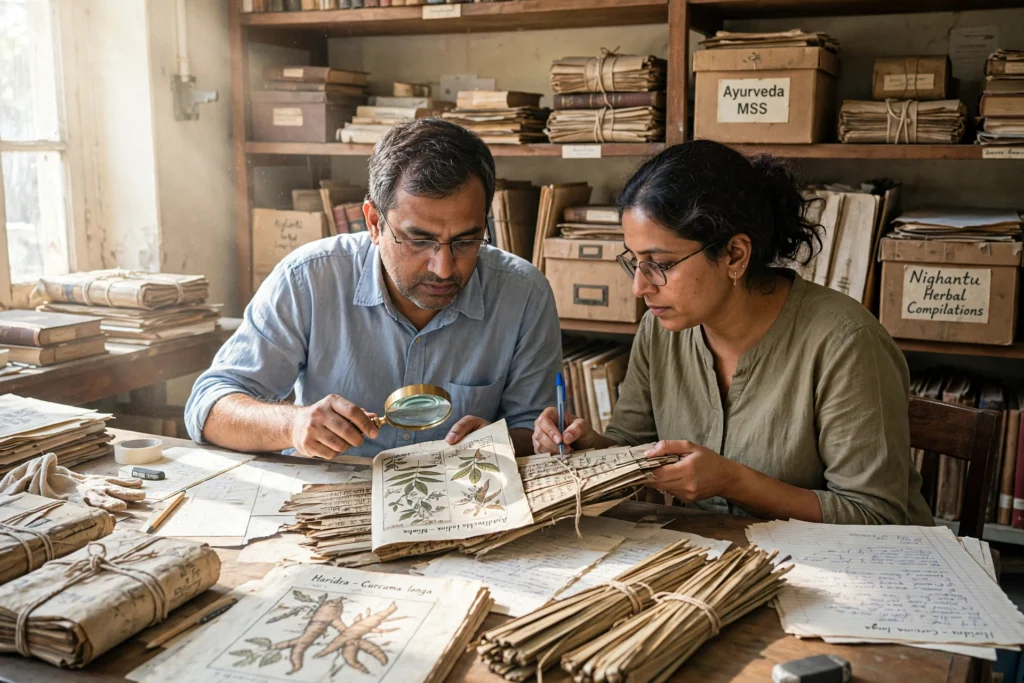
Ancient Indian medical knowledge was transmitted through oral traditions and later recorded in classical texts. Over time, Ayurveda developed a broad body of knowledge covering health, disease, medicinal substances, nutrition, diagnosis, treatment, and, in some traditions, surgery.
Two texts are especially important when discussing classical Ayurveda: the Charaka Samhita and the Sushruta Samhita.
Charaka Samhita and Classical Medicine
The Charaka Samhita is one of the major classical works associated with Ayurveda and is particularly important to the tradition of internal medicine.
Its discussions cover subjects such as health, illness, diagnosis, medicinal substances, diet, and clinical reasoning within the Ayurvedic framework.
Sushruta Samhita and the History of Surgery
The Sushruta Samhita is particularly well known for its discussion of surgery and surgical techniques.
Modern historical research has examined the text for its detailed treatment of surgery and other medical subjects, showing that ancient Indian medicine included a wider range of practices than the spa and wellness image often associated with Ayurveda today.
This history is fascinating, but it is important not to make a second mistake: historical importance is not the same thing as modern clinical proof.
A treatment can have a long cultural and historical tradition and still need modern research to determine whether it is effective and safe for a particular condition.
Ayurveda Ancient Wisdom in the Modern World
The continuing interest in Ayurveda is part of a much larger global conversation about traditional, complementary, and integrative medicine.
The World Health Organization’s current strategy for traditional medicine emphasizes evidence, safety, quality, regulation, qualified practice, and responsible integration into health systems.
That makes the modern conversation around Ayurveda more interesting than simply asking whether it is “old” or “new.”
The better question is how traditional knowledge can be understood, evaluated, and used responsibly in today’s world.
Ayurveda Principles: Vata, Pitta, Kapha, and Prakriti
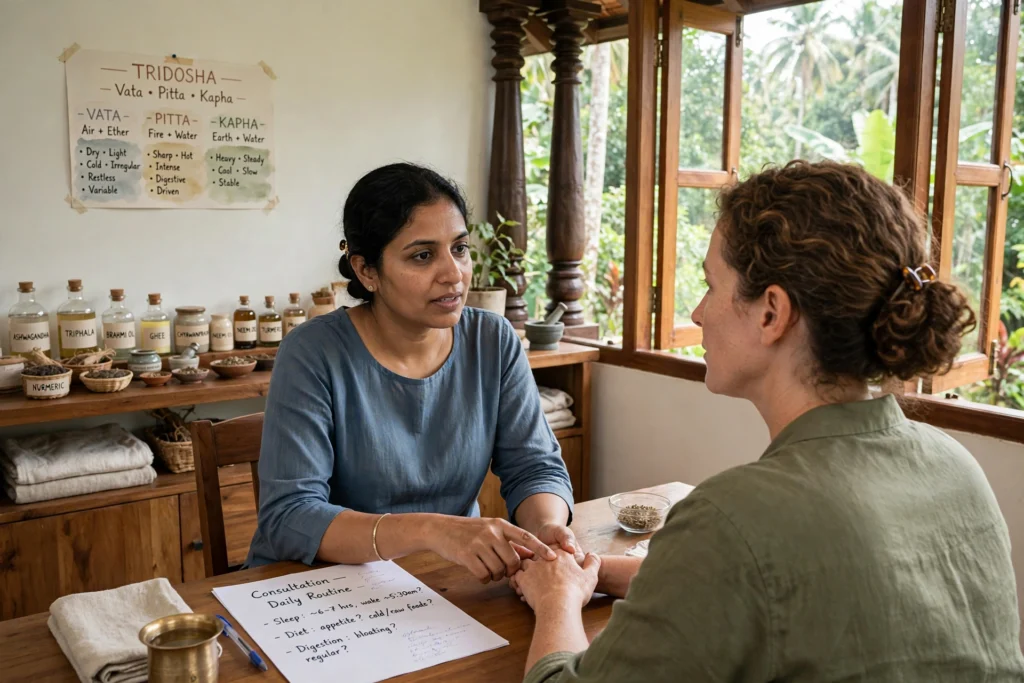
One of the most recognizable features of Ayurveda is its system of the three doshas: Vata, Pitta, and Kapha.
Within Ayurvedic theory, these concepts are used to describe functional patterns and individual characteristics. Practitioners may use them when developing personalized recommendations related to food, lifestyle, and traditional therapies.
Vata, Pitta, and Kapha
Vata is traditionally associated with movement, activity, and processes involving motion and communication.
Pitta is traditionally associated with transformation, digestion, metabolism, and heat.
Kapha is traditionally associated with structure, stability, lubrication, and cohesion.
In practice, Ayurvedic assessment is not necessarily about putting someone into one simple category. A practitioner may consider different characteristics together and develop recommendations based on the individual’s overall constitution and current circumstances.
One important point for readers in North America is that the doshas are concepts within Ayurvedic theory. They should not be presented as scientifically established equivalents of organs, hormones, or specific physiological systems.
What Is Prakriti in Ayurveda?
Prakriti Ayurveda refers to the concept of an individual’s constitution.
The traditional idea is that people have different inherent characteristics and that health recommendations should take those differences into account.
This is one reason an Ayurvedic consultation may look different from a conventional medical appointment. Rather than focusing only on one complaint, the practitioner may ask detailed questions about food, sleep, habits, digestion, lifestyle, and other aspects of daily life.
For someone interested in Ayurveda, understanding Prakriti can help explain why two people may receive different recommendations even when they are dealing with similar concerns.
Panchamahabhuta: The Five Great Elements
Another foundational concept is Panchamahabhuta, usually described as the five great elements:
- Earth
- Water
- Fire
- Air
- Space
These elements form part of the traditional Ayurvedic explanation of the natural world, the human body, and the doshas.
For modern readers, they are best understood within the philosophical framework of Ayurveda rather than as literal scientific descriptions of the body’s physical composition.
That distinction allows us to appreciate the intellectual structure of ancient Indian medicine without confusing traditional philosophy with modern biology.
Ayurvedic Lifestyle, Diet, and Traditional Therapies
Ayurveda is often as much about everyday habits as it is about treatment.
An Ayurvedic lifestyle may include attention to sleep, food, activity, daily routines, stress, and other behaviors. The traditional approach often views these things as interconnected rather than treating health as a collection of unrelated symptoms.
Ayurvedic Diet and Daily Routine
Food has an important place in Ayurvedic traditions.
Depending on the individual and the practitioner, an Ayurvedic diet may involve recommendations concerning food choices, meal timing, preparation methods, spices, and eating patterns.
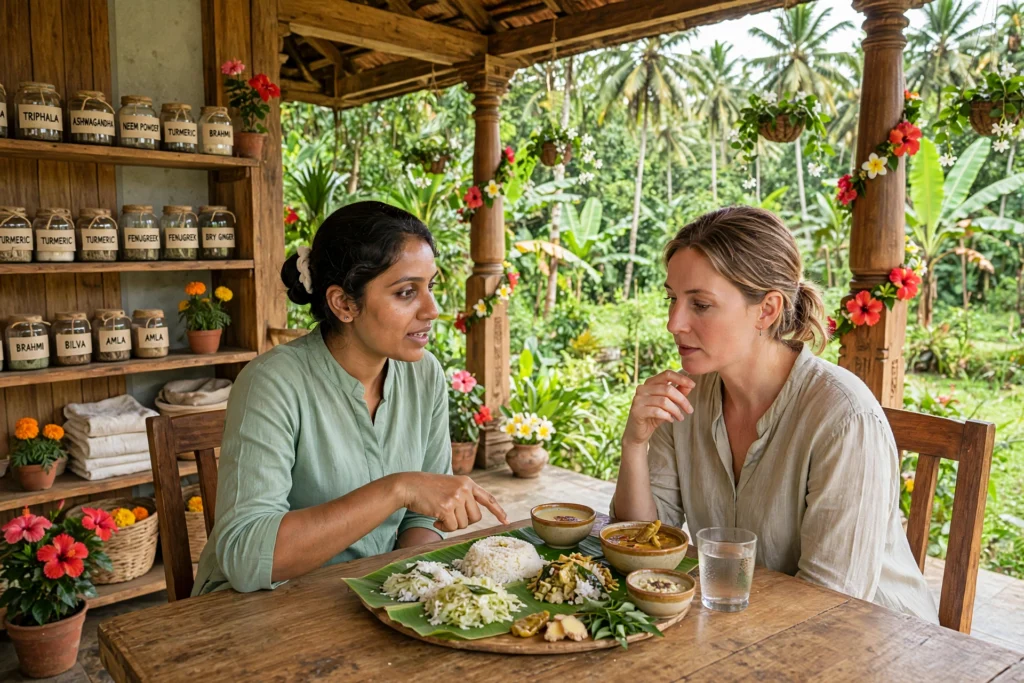
There is no single Ayurvedic diet that is appropriate for everyone.
That is particularly important for people with diagnosed medical conditions. Someone taking medication for diabetes, blood pressure, thyroid disorders, or another condition should not make major dietary or supplement changes without discussing them with an appropriate healthcare professional.
Traditional dietary advice may complement a person’s overall approach to wellbeing, but it should not replace medically necessary care.
Ayurvedic Massage
Ayurvedic massage is one of the better-known practices associated with Ayurveda.
Traditional massage approaches may involve specific techniques, oils, duration, and routines depending on the practitioner and the individual’s needs.
People sometimes seek these therapies for relaxation, comfort, stress management, or as part of a broader Ayurvedic wellness program.
However, claims about curing diseases or producing guaranteed medical outcomes should be approached carefully.
Common Ayurvedic Therapies
Ayurvedic programs can contain a wide variety of traditional therapies, and the exact combination differs from one provider to another.
Among the practices people may encounter are oil-based treatments, herbal applications, steam treatments, nasal therapies, poultices, massage, dietary guidance, and other traditional procedures.
TraveCure’s current Ayurveda service describes access to traditional programs in Kerala that can include Panchakarma, Ayurvedic nutrition, yoga, lifestyle guidance, and other therapies through partner providers.
What Is Panchakarma?
Panchakarma is probably one of the most frequently searched Ayurvedic therapies.
Within Ayurvedic practice, Panchakarma refers to a group of traditional therapeutic procedures. The specific procedures, preparation, duration, and follow-up can vary depending on the practitioner and treatment program.
You may find websites claiming that Panchakarma “flushes toxins” from the body or guarantees particular health outcomes. Those statements should be treated cautiously.
It is more accurate to describe Panchakarma as a traditional Ayurvedic therapeutic framework rather than making broad medical claims about detoxification or disease treatment.
Anyone considering an intensive treatment program should first discuss the process with a qualified practitioner and disclose current medications, medical conditions, allergies, pregnancy status, and any planned procedures.
What Does Modern Research Say About Ayurvedic Medicine?
This is perhaps the most important question for anyone researching Ayurveda today.
The answer is not simply “yes” or “no.”
Scientific evidence varies depending on the specific Ayurvedic medicine, therapy, preparation, and health condition being studied.
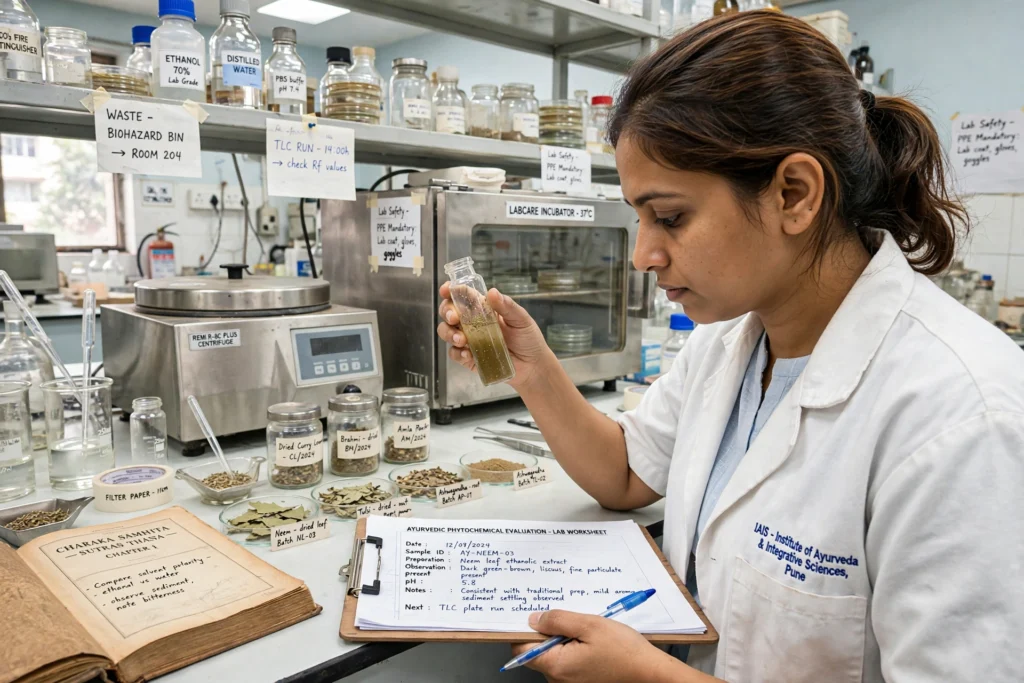
NCCIH states that a few studies suggest certain Ayurvedic preparations may reduce pain and improve function in people with osteoarthritis and may help manage symptoms associated with type 2 diabetes. At the same time, it notes that many studies have been small or poorly designed, and that evidence for many other health conditions remains limited.
In other words, it is misleading to talk about “proof of Ayurveda” as though every Ayurvedic practice has been tested and found effective.
What Research Says About Osteoarthritis
A systematic review and meta-analysis published in Rheumatology International examined clinical studies of Ayurvedic interventions for osteoarthritis.
The researchers reported potentially promising findings from some interventions, but the review also identified significant limitations in the available evidence and called for better-quality clinical studies.
That is a useful way to interpret complementary medicine research generally.
A positive result from one treatment does not prove that every therapy within the same traditional system works in the same way.
What Research Says About Type 2 Diabetes
A 2022 systematic review and meta-analysis examined randomized controlled trials of Ayurvedic medicines used in type 2 diabetes.
The researchers reported possible improvements in measures such as blood glucose and HbA1c for several interventions, but also noted limitations involving methodological quality and reporting of adverse events. The authors concluded that better-quality trials are still needed. (PubMed)
For patients, this means that scientific research can be encouraging without being definitive.
That distinction matters.
Traditional use, promising research, and established clinical evidence are three different things.
Is Ayurvedic Treatment Safe?
Safety should always be part of the conversation.
Ayurvedic practices are not automatically safe simply because they are traditional or natural.
NCCIH warns that some Ayurvedic preparations may contain lead, mercury, or arsenic at potentially toxic levels.
The U.S. Food and Drug Administration has also warned consumers about certain unapproved Ayurvedic products associated with harmful levels of heavy metals.
This does not mean every Ayurvedic product is dangerous. It means that product quality, ingredients, manufacturing standards, dosage, and professional supervision matter.
Natural Does Not Always Mean Risk-Free
A herb can interact with a prescription medication. A supplement can contain contaminants. A concentrated preparation can have a very different effect from a food traditionally used in small amounts.
That is why it is important to tell both your physician and Ayurvedic practitioner about everything you are taking.
This includes:
- Prescription medication
- Over-the-counter medication
- Vitamins
- Herbal supplements
- Traditional medicines
- Allergies
- Existing health conditions
- Pregnancy or breastfeeding
What Canadians Should Know
For people in Canada, natural health products are regulated under Canada’s natural health product framework.
Health Canada says licensed products can be identified by an eight-digit Natural Product Number (NPN) or Homeopathic Medicine Number (DIN-HM) on the label. It also provides a database where consumers can check licensed natural health products.
That is useful information for anyone considering Ayurvedic products in Canada.
Consumers should also be cautious when purchasing products online from other countries. Products sold internationally may not meet the same regulatory requirements or contain the same ingredients expected in Canada.
What Americans Should Know
For Americans, the regulatory situation is different.
The FDA has warned about specific Ayurvedic products containing toxic metals and has made clear that consumers should not assume that an Ayurvedic product has been FDA-approved simply because it is marketed online or described as natural.
Checking the source, ingredients, manufacturing information, and professional guidance is therefore essential.
Ayurveda in Kerala: What International Patients Should Consider
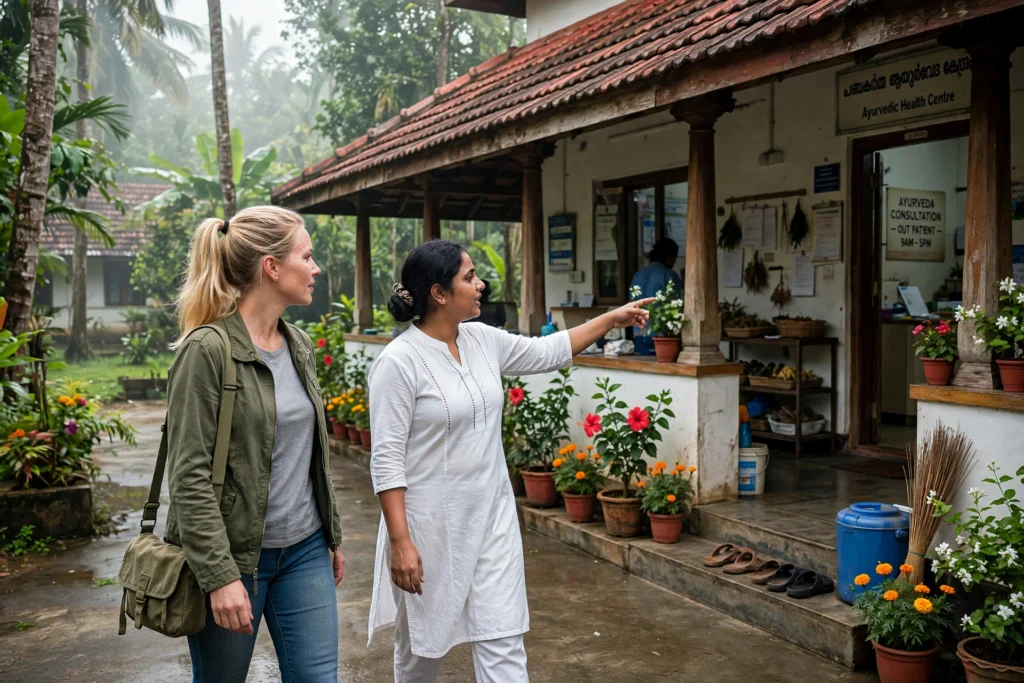
Kerala has a strong association with Ayurveda and has become one of the best-known destinations for people interested in Ayurvedic programs in India.
For someone considering Ayurveda in Kerala, however, choosing a destination is only the beginning.
Travelling abroad for treatment or wellness involves questions that may not arise when receiving care close to home.
You should look at the qualifications of the practitioner, the facility, the proposed treatment plan, expected length of stay, medication requirements, travel arrangements, emergency procedures, insurance, and follow-up care.
Choosing an Ayurvedic Provider
Before booking an Ayurvedic program, ask practical questions.
Who will assess you?
What are the practitioner’s qualifications and professional registration?
What exactly is included in the program?
Which therapies will be provided?
What products or medicines will you receive?
What happens if you experience an adverse reaction or need conventional medical attention?
WHO has developed benchmarks for the practice of Ayurveda covering issues such as providers, facilities, safety, health products, regulatory considerations, ethics, and quality.
WHO has also published benchmarks for the training of Ayurveda practitioners, emphasizing appropriate knowledge, skills, safety, and training requirements.
These documents do not certify a particular clinic, but they provide useful reference points when thinking about what responsible Ayurvedic practice should look like.
Ayurveda for Canadians and Americans: Planning Treatment Abroad
An Ayurvedic wellness retreat in India can sound simple when viewed from a distance: choose a location, book the program, and travel.
The reality can be more complicated.
International patients may need to arrange visas, flights, accommodation, travel insurance, medical records, medications, airport transportation, treatment schedules, and follow-up plans.
That is where medical travel coordination can become valuable.
Before travelling, think about what would happen if treatment takes longer than expected or if a medical complication occurs.
Reading about medical travel and complications insurance can help international patients understand why travel coverage deserves attention before making a booking.
Similarly, anyone travelling to India should review the relevant medical visa information and make sure they understand the requirements that apply to their circumstances.
These practical details may not be as exciting as learning about Ayurvedic massage or Panchakarma, but they can have a significant impact on the overall experience.
How TraveCure Supports an Ayurvedic Medical Travel Journey
For international patients, navigating healthcare in another country can involve a lot of moving parts.
A medical facilitator can help coordinate communication, provider arrangements, scheduling, travel logistics, accommodation, and other parts of the journey.
TraveCure currently presents itself as a medical facilitation service connecting international patients with healthcare and wellness providers in India. Its Ayurveda offering focuses on helping patients access Ayurvedic programs in Kerala while coordinating practical aspects of the journey.
It is important to understand the distinction:
TraveCure is a medical facilitation service, not a medical facility.
Diagnosis, treatment decisions, prescriptions, and clinical care are provided by qualified healthcare professionals. TraveCure’s role is to help patients navigate and coordinate the journey.
For someone researching options, TraveCure’s Ayurveda services can provide a starting point for understanding what an Ayurvedic medical travel program may involve.
How to Explore Ayurveda Responsibly
There is no need to choose between being open-minded and being cautious.
You can be genuinely interested in Ayurveda ancient wisdom while still asking modern, practical questions.
Before starting an Ayurvedic program, consider the following:
Understand the treatment.
Know exactly what you are being offered and what the process involves.
Check practitioner credentials.
Ask about education, registration, professional experience, and the facility where treatment will take place.
Look at the evidence.
Ask whether the specific treatment has been studied and what the research actually shows.
Review medications and supplements.
Tell your healthcare providers about everything you are taking.
Be cautious with guaranteed claims.
Promises of guaranteed cures, completely risk-free treatments, or universal results should raise questions.
Plan for continuity of care.
If you travel abroad, think about what happens after you return home.
This balanced approach does not dismiss traditional medicine. It simply recognizes that patients deserve clear information about both the potential benefits and the potential risks.
Frequently Asked Questions About Ayurveda
What is Ayurveda?
Ayurveda is a traditional system of medicine that originated in India. It includes approaches involving diet, lifestyle, traditional therapies, herbal preparations, and individualized care.
How old is Ayurveda?
Ayurveda has ancient roots in India and developed over many centuries through oral traditions and classical medical literature. Because its development was gradual, it is more accurate to describe it as an ancient evolving tradition than to assign one exact age.
What are Vata, Pitta, and Kapha?
Vata, Pitta, and Kapha are the three doshas in Ayurvedic theory. They are traditional concepts used to describe functional patterns and individual characteristics within the Ayurvedic framework.
What is Prakriti in Ayurveda?
Prakriti refers to an individual’s constitution in Ayurvedic theory. Ayurvedic practitioners may use this concept as part of a personalized assessment.
What is Panchakarma?
Panchakarma is a group of traditional Ayurvedic therapeutic procedures. The specific treatments and preparation can differ depending on the practitioner and program.
Is Ayurvedic medicine scientifically proven?
Scientific evidence varies significantly between Ayurvedic treatments and products. Some studies suggest potential benefits for specific conditions, but many studies are limited in size or quality, and more high-quality research is needed.
Is Ayurvedic treatment safe?
Some Ayurvedic approaches may be appropriate when properly supervised, but safety depends on the specific treatment and product. Certain Ayurvedic preparations may contain potentially harmful levels of heavy metals such as lead, mercury, or arsenic.
Can Ayurveda be used alongside conventional medicine?
Some people use complementary approaches alongside conventional healthcare, but it is important to tell your healthcare providers about all medicines, herbs, and supplements you use because interactions are possible.
Why is Kerala associated with Ayurveda?
Kerala has a long and well-established association with Ayurvedic practice and is widely known for Ayurvedic institutions, practitioners, therapies, and wellness programs.
Can Canadians and Americans travel to India for Ayurvedic treatment?
People from Canada and the USA can travel internationally for healthcare and wellness services, but they should research practitioner qualifications, facility standards, treatment details, insurance, visa requirements, medication safety, and follow-up care before travelling.
Conclusion: Ancient Wisdom With a Modern Perspective
Ayurveda is much more than herbal remedies, massage, or a relaxing retreat.
It is a traditional Indian system with a rich history, a distinctive philosophy, and a broad approach that encompasses food, lifestyle, constitution, and therapeutic practices.
Its continued popularity is understandable. Many people are drawn to its emphasis on individualized care, daily habits, and the connection between different aspects of wellbeing.
But today’s readers also have something that earlier generations did not: access to a growing body of scientific research and better information about product quality and safety.
That makes a balanced approach possible.
You can appreciate the history of Ayurveda while asking what evidence exists for a particular treatment. You can explore traditional therapies while checking practitioner qualifications. You can travel to India for an Ayurvedic program while making sure that insurance, visas, medical records, and follow-up care are properly planned.
For people in Canada and the United States considering Ayurveda travel to India, the journey should begin with good information.
TraveCure helps international patients navigate and coordinate medical and wellness journeys in India by connecting them with appropriate providers and supporting the practical side of travel. TraveCure is a medical facilitation service, not a medical facility.
To explore available options, visit TraveCure’s Ayurveda services or speak with the TraveCure team about planning an Ayurvedic journey in India.
Medical Disclaimer: This article is intended for general educational purposes only and is not a substitute for professional medical advice, diagnosis, or treatment. Evidence for Ayurvedic medicines and therapies varies, and some products may pose safety risks. Always discuss your healthcare decisions, medications, supplements, and treatment plans with an appropriately qualified healthcare professional.