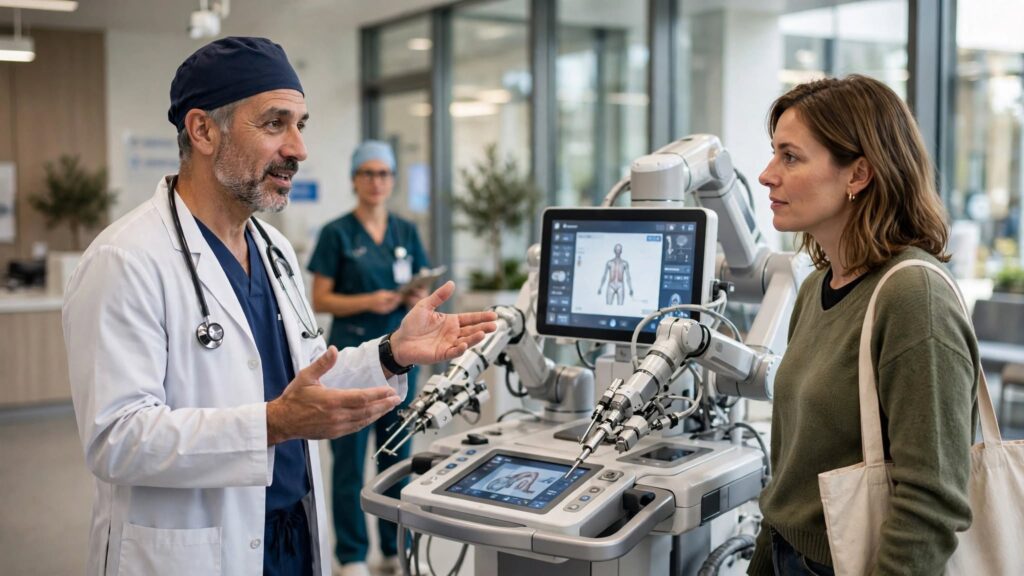
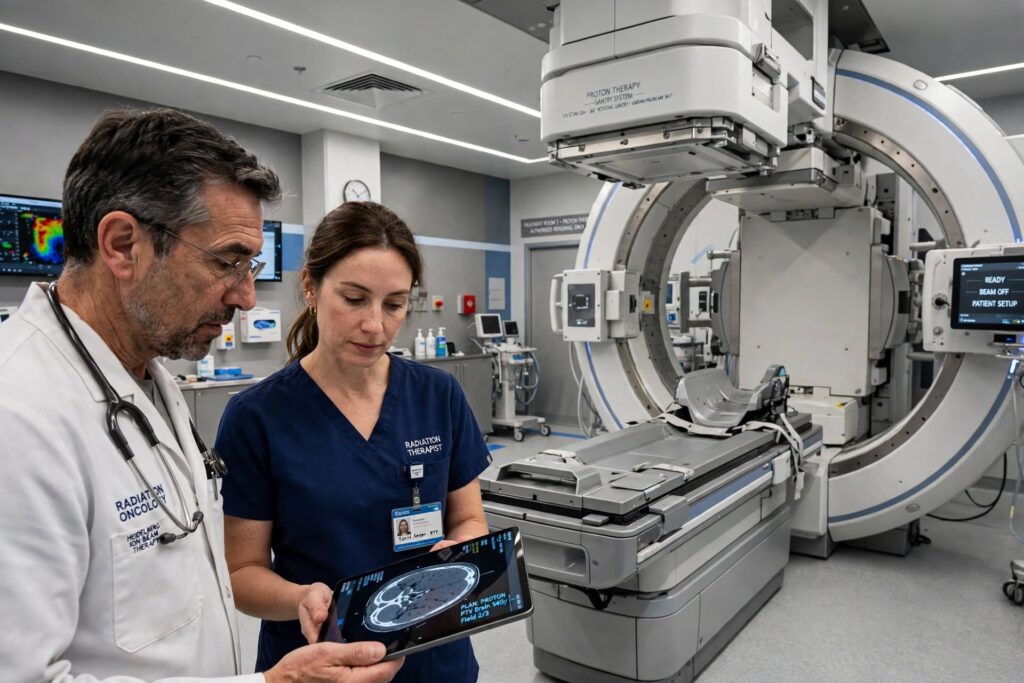
What if radiation treatment could target cancer while reducing unnecessary radiation exposure to nearby healthy organs?
That’s one of the possibilities that makes proton therapy an important advancement in modern cancer care.
For someone diagnosed with cancer, the treatment journey often begins with difficult questions. Which treatment offers the best chance of controlling the disease? What side effects should you expect? Could a newer technology make treatment easier on the body?
These concerns are understandable, especially when the tumour is located near sensitive structures such as the brain, spinal cord, or heart.
Proton therapy offers a different approach to delivering radiation. Rather than using conventional X-rays, it uses precisely controlled proton particles to treat cancer.
But there’s an important distinction: proton therapy isn’t necessarily better for every patient or every type of cancer.
Its advantages depend on the tumour’s location, the surrounding organs, previous treatments, and several other medical factors.
Whether you’re exploring proton therapy in Canada, comparing treatment options in the United States or Europe, or considering specialised care abroad, understanding the facts can help you have more productive conversations with your medical team.
Watch: How Proton Therapy Works
Curious about how proton therapy works? This short educational video explains how proton beam therapy targets cancer cells, how it differs from conventional radiation therapy, and why it may be considered for certain cancers. Watch to understand the basics before exploring its potential benefits, risks, and treatment options.
Let’s explore how proton therapy works, where it may offer advantages, and what you should know before making a treatment decision.
What Is Proton Therapy, and How Does It Work?
Imagine trying to direct a beam of energy toward a tumour located deep inside the body.
The challenge isn’t simply reaching the cancer. It’s delivering enough radiation to treat the tumour while protecting as much surrounding healthy tissue as possible.
That’s where proton therapy becomes particularly interesting.
Proton therapy, also known as proton beam therapy, is an advanced form of radiation treatment that uses high-energy proton particles to damage cancer cells and prevent them from multiplying.
Like other forms of radiation therapy, its goal is to destroy cancer cells or stop their growth.
What makes it different is how the radiation travels through the body.
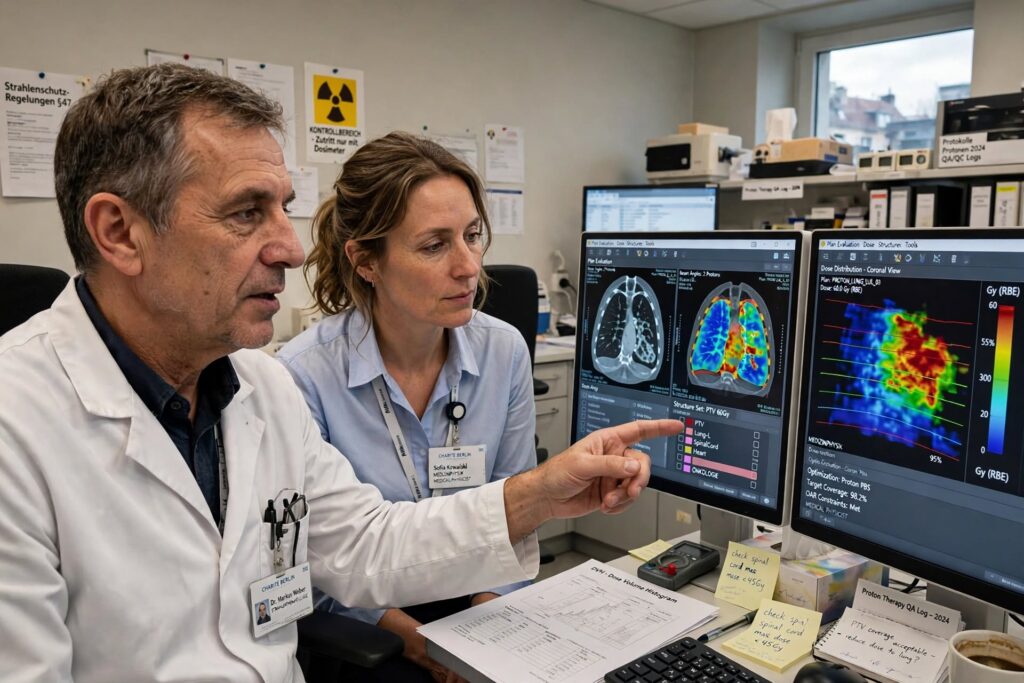
The Science Behind Proton Beam Therapy
Traditional radiation therapy commonly uses high-energy X-rays, also called photons.
These beams deposit energy as they travel through the body. Although modern radiation techniques can shape and control the treatment very precisely, radiation generally continues beyond the targeted area.
Protons behave differently.
They release much of their energy at a specific depth before coming to a stop.
This physical characteristic is called the Bragg peak.
By adjusting the energy of the proton beam, radiation specialists can control how deeply the particles travel.
The result?
In certain treatment situations, doctors can deliver the required radiation dose to a tumour while reducing radiation exposure to healthy tissues beyond it.
That distinction can be especially valuable when cancer develops close to delicate organs.
What Is Intensity Modulated Proton Therapy (IMPT)?
Not all proton therapy treatments use exactly the same delivery technique.
One advanced approach is intensity modulated proton therapy (IMPT).
IMPT uses scanning proton beams to deliver carefully planned radiation doses across the tumour.
The intensity and position of the beam can be adjusted to accommodate complex tumour shapes.
For example, a tumour near the base of the skull may sit close to nerves and other critical structures.
IMPT can help radiation oncologists develop a highly customised treatment plan.
However, the most sophisticated technology isn’t automatically the most appropriate option. Medical specialists must determine whether the technique provides a meaningful advantage for the individual patient.
Proton Therapy vs. Traditional Radiation Therapy: What’s the Difference?
When researching proton therapy for cancer, one question comes up repeatedly:
Is proton therapy better than traditional radiation therapy?
It’s an important question, but the answer isn’t a simple yes or no.
Both treatments use radiation to damage cancer cells. Both require careful planning, specialist expertise, and follow-up care.
The main difference is how radiation energy is delivered to the target area.
Proton Therapy vs. Photon Therapy
| Feature | Proton Therapy | Traditional Photon Radiation |
|---|---|---|
| Radiation used | High-energy protons | High-energy X-rays |
| Energy delivery | Most energy can be deposited at a controlled depth | Energy is deposited along the beam’s path |
| Radiation beyond the tumour | Can be substantially reduced | Generally continues beyond the tumour |
| Treatment planning | Highly precise and specialised | Highly precise with modern techniques |
| Healthy tissue protection | May offer advantages in selected cases | Depends on treatment technique and tumour location |
| Availability | Limited to specialised facilities | More widely available |
Modern photon radiation therapy has also improved significantly.
Techniques such as intensity modulated radiation therapy (IMRT) can deliver highly conformal treatment while reducing exposure to nearby organs.
This means patients shouldn’t assume that proton therapy always produces better results simply because the technology is different.
Does Proton Therapy Have a Higher Success Rate?
There’s no universal proton therapy success rate.
Treatment outcomes depend on factors such as:
- The type and stage of cancer
- The tumour’s location and characteristics
- Previous treatments
- The patient’s overall health
- Whether other treatments are used alongside radiation
For some cancers, proton therapy’s main potential advantage is reducing radiation exposure to healthy tissue rather than improving the likelihood of cancer control.
Clinical trials continue to investigate whether this difference leads to fewer side effects, better quality of life, or improved outcomes for particular patient groups.
The most useful question isn’t whether proton therapy is better overall. It’s whether proton therapy is better for your specific cancer.
Your radiation oncologist can help answer that question using your medical history and treatment scans.
Proton Therapy Benefits, Side Effects and Limitations
The possibility of protecting healthy tissue is a major reason patients become interested in proton therapy.
However, understanding its potential benefits also means recognising what the treatment cannot guarantee.
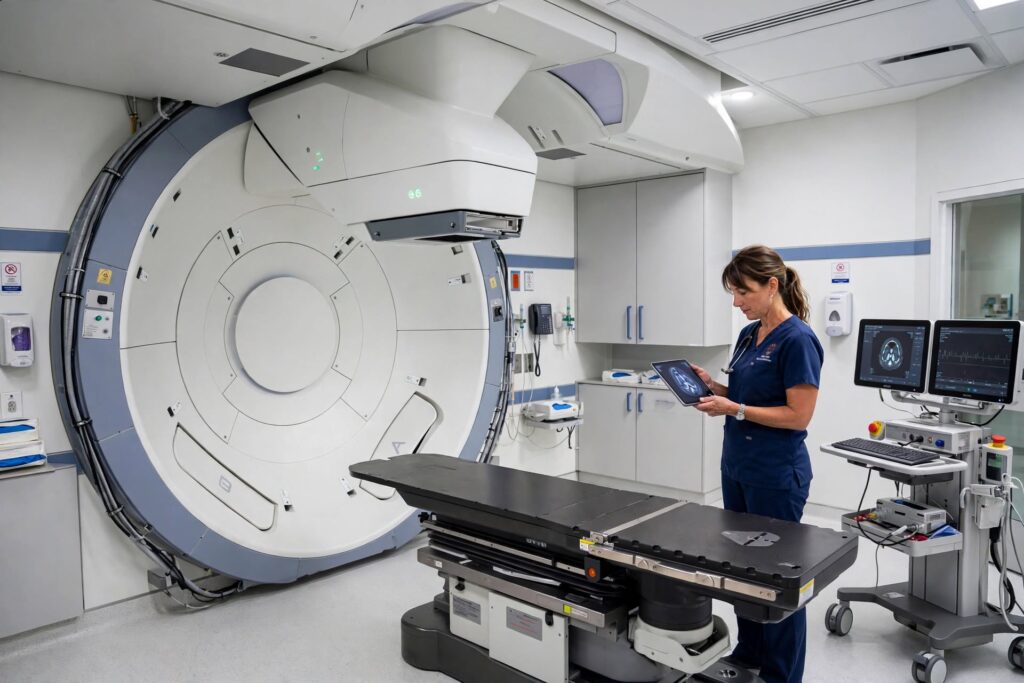
What Are the Main Benefits of Proton Therapy?
1. Reduced radiation exposure to healthy tissues
One of the most significant proton therapy benefits is its ability to reduce radiation delivered beyond the tumour.
This may be important when a tumour is close to sensitive organs.
For example, when treating certain tumours near the spinal cord, specialists must carefully limit radiation exposure to nearby neurological structures.
Proton therapy may offer a useful advantage in treatment planning.
2. Potential reduction in certain side effects
Because proton therapy can reduce radiation exposure to some healthy tissues, it may lower the risk of particular treatment-related complications.
However, fewer side effects aren’t guaranteed.
The actual benefit depends on the tumour location, radiation dose, treatment technique, and individual patient circumstances.
3. Potential advantages for children
Children are especially sensitive to some long-term effects of radiation because their organs and tissues are still developing.
For selected childhood cancers, proton therapy may help reduce unnecessary radiation exposure to developing structures.
This is one reason proton therapy is considered in certain paediatric cancer treatment plans.
4. Treatment of complex tumour locations
Some cancers develop in locations where protecting nearby organs is particularly challenging.
Proton therapy may allow specialists to develop favourable radiation plans for selected tumours involving the brain, skull base, head and neck, or other complex anatomical areas.
5. An additional option for selected patients requiring repeat radiation
Cancer occasionally returns in an area that has already received radiation treatment.
Delivering further radiation can be challenging because surrounding tissues have previously been exposed.
In carefully selected cases, proton therapy may offer a way to reduce additional radiation exposure to certain healthy structures.
These situations require detailed specialist evaluation.
What Are the Side Effects of Proton Therapy?
A common misconception is that proton therapy is completely free from side effects.
That’s not the case.
Although proton therapy can reduce radiation exposure to certain healthy tissues, it still uses radiation to treat cancer.
Possible proton therapy side effects include:
- Fatigue during or after treatment
- Skin redness or irritation
- Temporary hair loss in the treated area
- Localised swelling or discomfort
- Appetite changes
- Symptoms related to the organs being treated
The side effects can differ significantly depending on where radiation is delivered.
For instance, someone receiving treatment near the head and neck may experience different symptoms from someone undergoing treatment for prostate cancer.
Some effects appear during treatment and improve afterward.
Others may develop months or years later.
Your oncology team should explain both the short-term and long-term risks relevant to your treatment plan.
Understanding Proton Therapy Risks and Limitations
Proton therapy has several limitations patients should consider.
First, the treatment requires specialised equipment and experienced medical teams.
Second, the movement of organs and changes in body anatomy can affect how proton beams deliver radiation.
For example, breathing-related movement may make treatment planning more complex for certain lung tumours.
Third, evidence supporting proton therapy varies across different cancers.
While some patient groups may receive clear dosimetric advantages, improved clinical outcomes have not been established for every diagnosis.
Finally, proton therapy may not be available close to home.
For patients considering proton therapy abroad, access to specialised facilities must be balanced against medical suitability, travel requirements, and continuity of care.
Which Cancers Can Be Treated With Proton Therapy?
Proton therapy is used or considered for several types of cancer.
However, having a particular diagnosis doesn’t automatically mean someone is eligible.
The decision depends on whether proton therapy offers a meaningful advantage compared with other available treatments.
Brain and Central Nervous System Tumours
The brain and spinal cord contain sensitive structures that require careful protection during radiation treatment.
Proton therapy may be considered for selected brain tumours, skull-base tumours, and other central nervous system cancers.
Its ability to reduce radiation beyond the treatment target may be useful when nearby healthy brain tissue or neurological structures need protection.
Prostate Cancer
Proton therapy is an established radiation treatment option for certain patients with prostate cancer.
Its radiation delivery characteristics may help reduce exposure to some surrounding tissues.
However, research has not consistently demonstrated that proton therapy provides better cancer control or fewer side effects than modern photon radiation techniques.
Patients should discuss all appropriate treatment options, including conventional radiation and other approaches, with their specialists.
Head and Neck Cancers
The head and neck contain numerous structures involved in speaking, swallowing, hearing, and other essential functions.
For selected tumours in this region, proton therapy may help reduce radiation exposure to surrounding tissues.
Whether this produces fewer complications depends on the individual treatment plan and clinical circumstances.
Childhood Cancers
Paediatric cancer treatment requires particular attention to long-term health.
Because children are still growing, reducing unnecessary radiation exposure may help lower the risk of certain late treatment effects.
Proton therapy may be considered for selected childhood brain tumours and other paediatric cancers.
Long-term monitoring remains essential regardless of the radiation technique used.
Other Cancers That May Be Considered
Depending on the diagnosis and clinical situation, proton therapy may also be considered for selected patients with:
- Lung cancer
- Breast cancer
- Liver cancer
- Oesophageal cancer
- Sarcomas
- Certain gastrointestinal cancers
- Recurrent cancers requiring additional radiation
Evidence and recommendations differ among these conditions.
For some cancers, proton therapy remains an area of ongoing clinical research rather than an established preferred treatment.

Who Is Eligible for Proton Therapy?
Eligibility is determined by a qualified radiation oncologist.
The specialist typically reviews diagnostic imaging, pathology reports, previous treatments, overall health, and the position of the tumour.
One particularly useful approach involves comparing two radiation treatment plans: one using protons and another using photons.
This comparison can help the medical team assess whether proton therapy offers a meaningful reduction in radiation exposure to important organs.
Patients should remember that treatment eligibility is a medical decision, not a matter of personal preference or access to technology alone.
If you’re uncertain whether proton therapy is appropriate, seeking a second opinion from an experienced radiation oncologist may help clarify your options.
What Happens During Proton Therapy Treatment?
Learning that radiation treatment may involve several hospital visits can raise practical concerns.
Will treatment be painful? How much time will appointments take? Will you need to stay in hospital?
The experience varies depending on the cancer being treated, but proton therapy generally follows a structured process.
Step 1: Specialist Consultation and Medical Assessment
Treatment begins with a detailed medical evaluation.
The radiation oncologist reviews the diagnosis, medical history, imaging results, and previous cancer treatments.
The specialist then determines whether proton therapy is appropriate.
Additional tests or consultations may be necessary before a treatment recommendation is made.
Step 2: Treatment Planning
If proton therapy is recommended, the patient undergoes a planning process.
This commonly includes a CT simulation scan.
Depending on the tumour, MRI or other imaging may also be used.
The medical team develops a customised radiation plan designed to deliver the prescribed dose while limiting exposure to nearby healthy organs.
Special positioning devices may be prepared to help the patient remain in the correct position during treatment.
Step 3: Proton Beam Therapy Sessions
During treatment, the patient lies on a treatment table.
Radiation therapists carefully position the patient and verify alignment before delivering the proton beam.
The radiation itself is painless.
Patients don’t feel the beam entering the body.
The medical team monitors treatment delivery from a separate control area.
Step 4: Monitoring Throughout Treatment
Patients are monitored throughout their treatment course.
The team assesses symptoms, checks treatment accuracy, and determines whether adjustments are necessary.
Patients should report new or worsening symptoms rather than waiting until treatment is complete.

Step 5: Recovery and Follow-Up
After the final session, follow-up appointments help specialists evaluate treatment response and monitor side effects.
Some patients can continue many of their usual activities during treatment.
Others may need additional rest or supportive care.
Recovery depends on the treatment area, radiation dose, other cancer treatments, and individual health.
How Long Does Proton Therapy Treatment Take?
Proton therapy treatment duration varies according to the cancer type, treatment plan, and prescribed radiation schedule.
Some patients require relatively few sessions, while others attend treatment over several weeks.
Individual appointments include positioning, imaging verification, and radiation delivery.
The actual radiation exposure usually occupies only part of the appointment.
If you’re planning to receive treatment away from home, ask the treatment centre for the expected schedule before arranging travel.
Planning appointments, treatment sessions, and follow-up care may all affect how long you need to remain near the facility.
Exploring Proton Therapy in Canada or Abroad
For many patients, understanding the treatment is only the beginning.
The next question is often practical:
Where can I receive proton therapy, and how do I explore my options?
Access varies considerably between countries and healthcare systems.
Is Proton Therapy Available in Canada?
Proton therapy access in Canada has historically been limited compared with conventional radiation therapy.
Depending on the patient’s diagnosis and the availability of appropriate facilities, Canadian specialists may consider referrals to proton therapy centres outside the country.
Provincial healthcare programmes have specific assessment, referral, and funding requirements.
These arrangements can change as healthcare infrastructure and treatment policies develop.
Canadian patients should therefore begin by discussing their options with their treating oncologist or provincial cancer agency.
They should also confirm the current availability of proton therapy facilities rather than relying on outdated online information.
Proton Therapy Treatment Centres in the USA and Europe
The United States has a number of specialised proton therapy treatment centres.
Several European countries also have established facilities offering proton beam treatment.
These include centres in countries such as Germany, France, Italy, the United Kingdom, and the Netherlands.
However, not every centre accepts international patients, and treatment availability depends on medical eligibility.
A facility’s reputation alone shouldn’t determine your decision.
Its experience with your particular cancer, treatment technology, medical team, and follow-up arrangements are more relevant considerations.
Can Patients Travel Abroad for Proton Therapy?
Yes, some patients explore proton beam therapy abroad when specialised treatment is unavailable locally or when they want another medical opinion.
However, international cancer treatment requires careful coordination.
Consider a patient who needs radiation treatment over several weeks.
Beyond selecting a hospital, the patient may need to arrange accommodation, medical records, travel documents, and follow-up appointments.
They must also consider whether travelling is medically appropriate.
For patients undergoing cancer treatment, fatigue, other ongoing therapies, and existing health conditions can affect travel plans.
That’s why international treatment decisions should always begin with medical advice.

How TraveCure Fits Into International Medical Travel
When exploring healthcare outside your home country, understanding the difference between a medical provider and a medical facilitation service is essential.
TraveCure is a medical facilitation service, not a hospital or medical treatment facility.
Its role is separate from the clinical responsibilities of hospitals, radiation oncologists, and other qualified healthcare professionals.
Patients exploring international healthcare arrangements can visit TraveCure’s services page to learn more about its medical facilitation services.
TraveCure does not itself provide proton therapy, determine treatment eligibility, or make clinical treatment decisions.
Whether proton therapy is available through a particular healthcare facility must be confirmed directly before any arrangements are made.
How Much Does Proton Therapy Cost?
The cost of proton therapy depends on individual medical requirements and the healthcare facility involved.
Because every patient’s treatment needs are different, a general figure may not accurately reflect the arrangements required for a particular case.
For information about TraveCure’s pricing approach, visit the TraveCure Pricing Page.
If you have questions about medical travel arrangements or would like to discuss your requirements, you can contact TraveCure through the available enquiry options.
Patients should obtain information directly through TraveCure rather than assuming that any particular treatment is offered at a fixed price.
What Should You Check Before Choosing Treatment Abroad?
Before considering an international treatment centre, ask yourself a few important questions.
Does the facility have experience treating your specific cancer?
Has a qualified radiation oncologist reviewed your medical records?
Does the centre actually offer proton therapy, or does it provide another type of radiation treatment?
What happens if additional medical care is required during your stay?
And perhaps most importantly, how will your medical team at home coordinate follow-up care after you return?
These details are just as important as the technology itself.
A well-organised international treatment plan should prioritise medical suitability, patient safety, and continuity of care.
Questions to Ask Your Radiation Oncologist Before Choosing Proton Therapy
When you’re facing a cancer treatment decision, it’s easy to feel that you need to understand every medical detail immediately.
You don’t.
What matters is asking questions that help you understand the options relevant to your diagnosis.
Consider discussing the following with your radiation oncologist:
1. Is proton therapy appropriate for my cancer?
Ask whether your tumour’s type, stage, and location make proton therapy a reasonable option.
2. How does proton therapy compare with conventional radiation for my situation?
Request an explanation of the potential benefits and limitations of both treatments.
3. Will proton therapy improve my treatment outcome?
Clarify whether the expected advantage involves cancer control, reduced side effects, protection of healthy tissues, or another factor.
4. What side effects should I expect?
Ask about both immediate symptoms and possible long-term complications.
5. How many treatment sessions will I need?
Understanding the schedule is especially important if you’re considering treatment away from home.
6. Are other treatments equally suitable?
Cancer treatment decisions may involve surgery, medication, radiation, or combinations of approaches.
Your specialist can explain which options are relevant.
7. Should I seek a proton therapy second opinion?
A second opinion may be useful when the expected advantage is uncertain or when treatment recommendations differ.
8. What follow-up care will I need?
Make sure you understand how your recovery and treatment response will be monitored.
The purpose of these questions isn’t to choose the most advanced-sounding treatment.
It’s to understand which treatment is most appropriate for you.
Frequently Asked Questions About Proton Therapy
1. Is Proton Therapy Better Than Regular Radiation?
Proton therapy may offer advantages over conventional radiation in selected cases because it can reduce radiation exposure to healthy tissues beyond the tumour. However, it hasn’t been proven better for every type of cancer. A radiation oncologist can determine whether it offers meaningful benefits for your diagnosis.
2. Is Proton Therapy Painful?
No. Proton therapy itself is painless, and patients generally cannot feel the radiation being delivered. However, some people experience treatment-related side effects, including fatigue, skin irritation, or discomfort associated with the area being treated.
3. How Long Does It Take to Recover From Proton Therapy?
Recovery varies depending on the cancer type, radiation dose, treatment area, and individual health. Some patients maintain their usual activities during treatment, while others experience fatigue or other symptoms that continue afterward. Your oncology team can explain the expected recovery timeline.
4. Can Proton Therapy Cure Cancer?
Proton therapy can be used with curative intent for certain cancers. However, no radiation treatment can guarantee a cure. Outcomes depend on the cancer diagnosis, stage, treatment response, and other medical factors. Patients should discuss their individual prognosis with their oncologist.
5. Can Canadian Patients Explore Proton Therapy Abroad?
Yes. Canadian patients may explore international proton therapy options when medically appropriate. However, treatment eligibility, travel suitability, facility availability, and healthcare coverage must be considered. Patients should consult their treating oncologist before pursuing treatment outside Canada.
Making an Informed Decision About Proton Therapy
Cancer treatment decisions are rarely straightforward.
When several treatment options are available, it’s natural to wonder whether a newer technology could offer better results or fewer complications.
Proton therapy has an important place in modern radiation oncology because of its ability to control radiation delivery and potentially reduce exposure to certain healthy tissues.
For selected patients, that advantage can be meaningful.
But the right treatment isn’t determined by technology alone.
It depends on the cancer diagnosis, medical evidence, specialist recommendations, and the patient’s individual needs.
If you’re researching proton therapy in Canada, the USA, Europe, or elsewhere, start with a qualified radiation oncologist who can explain your options.
And if international medical travel becomes part of your healthcare journey, understanding the practical arrangements is equally important.
Exploring medical treatment options outside your home country?
Visit TraveCure’s Pricing Page for pricing-related information, or contact TraveCure by phone, SMS, or enquiry to discuss your medical travel requirements.
TraveCure provides medical facilitation services and does not operate as a medical facility. All treatment decisions and medical care must remain under the guidance of qualified healthcare professionals.
Medical Disclaimer
This article is intended for general educational purposes only. It does not provide medical advice, diagnosis, or treatment recommendations.
Proton therapy is not suitable for every cancer or every patient. Treatment decisions should always be made in consultation with a qualified radiation oncologist.
TraveCure is a medical facilitation service and does not provide cancer treatment, proton therapy, or other clinical services.
Medical References
The following authoritative resources provide further information about radiation therapy, proton therapy, and cancer treatment.
1. National Cancer Institute (NCI)
Radiation Therapy to Treat Cancer
https://www.cancer.gov/about-cancer/treatment/types/radiation-therapy
2. National Cancer Institute (NCI)
Definition of Proton Beam Radiation Therapy
https://www.cancer.gov/publications/dictionaries/cancer-terms/def/proton-beam-radiation-therapy
3. American Cancer Society
Radiation Therapy
https://www.cancer.org/cancer/managing-cancer/treatment-types/radiation.html
4. Canadian Cancer Society
Radiation Therapy
https://cancer.ca/en/treatments/treatment-types/radiation-therapy
5. European Society for Radiotherapy and Oncology (ESTRO)
https://www.estro.org/
6. Particle Therapy Co-Operative Group (PTCOG)
https://www.ptcog.online/